Welcome to Googie Store India (Indian Digital Dukaan)

By continuing, you agree to Googie Store Terms of Use and Privacy Policy.
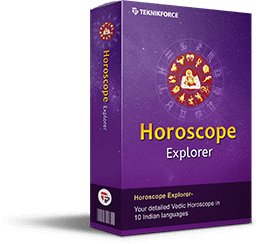


Astro Visual Software's Shop
In Stock
9984 Products Left$1500
$1125
25% OFF


Within LGBTQ+ culture, this distinction is vital. A transgender person can be gay, straight, bisexual, or asexual. By including the transgender community, the LGBTQ+ movement acknowledges that liberation requires dismantling both "heteronormativity" (the assumption that everyone is straight) and "cisnormativity" (the assumption that everyone identifies with the sex they were assigned at birth). Cultural Contributions and Language
These disparities sometimes lead to friction within the culture, as trans activists call for the "LGB" portions of the community to use their relative social capital to protect the most vulnerable members of the "T." The Future of the Community youngest shemale tube install
The transgender community and the broader LGBTQ+ culture are bound by a shared history of resistance, a common fight for civil rights, and a vibrant tapestry of shared spaces. While "LGBTQ+" serves as an umbrella term, the "T" represents a distinct journey of gender identity that has both anchored and revolutionized the movement. Within LGBTQ+ culture, this distinction is vital
This shared history created a foundation of solidarity. Transgender people provided the "radical" spark that demanded more than just tolerance; they demanded the right to exist authentically in public spaces. The "T" in the Umbrella: Identity vs. Orientation a common fight for civil rights
Refers to who you are attracted to (sexual orientation). T (Transgender): Refers to who you are (gender identity).
The transgender community is currently leading the most significant cultural conversation of the 21st century: the decoupling of biology from destiny. As Gen Z and Gen Alpha embrace gender fluidity at record rates, the "transgender experience" is becoming less of a niche subculture and more of a blueprint for how everyone—queer or straight—can live more authentically.
Within LGBTQ+ culture, this distinction is vital. A transgender person can be gay, straight, bisexual, or asexual. By including the transgender community, the LGBTQ+ movement acknowledges that liberation requires dismantling both "heteronormativity" (the assumption that everyone is straight) and "cisnormativity" (the assumption that everyone identifies with the sex they were assigned at birth). Cultural Contributions and Language
These disparities sometimes lead to friction within the culture, as trans activists call for the "LGB" portions of the community to use their relative social capital to protect the most vulnerable members of the "T." The Future of the Community
The transgender community and the broader LGBTQ+ culture are bound by a shared history of resistance, a common fight for civil rights, and a vibrant tapestry of shared spaces. While "LGBTQ+" serves as an umbrella term, the "T" represents a distinct journey of gender identity that has both anchored and revolutionized the movement.
This shared history created a foundation of solidarity. Transgender people provided the "radical" spark that demanded more than just tolerance; they demanded the right to exist authentically in public spaces. The "T" in the Umbrella: Identity vs. Orientation
Refers to who you are attracted to (sexual orientation). T (Transgender): Refers to who you are (gender identity).
The transgender community is currently leading the most significant cultural conversation of the 21st century: the decoupling of biology from destiny. As Gen Z and Gen Alpha embrace gender fluidity at record rates, the "transgender experience" is becoming less of a niche subculture and more of a blueprint for how everyone—queer or straight—can live more authentically.
 Astrology Software
 Electronics
  Home Regular Usage Products
  Food Items
  Medicare Products
  Pujan Samagri
 New TV Connection
  Movie
Movie Software Products
  Competitive Exam Notes